
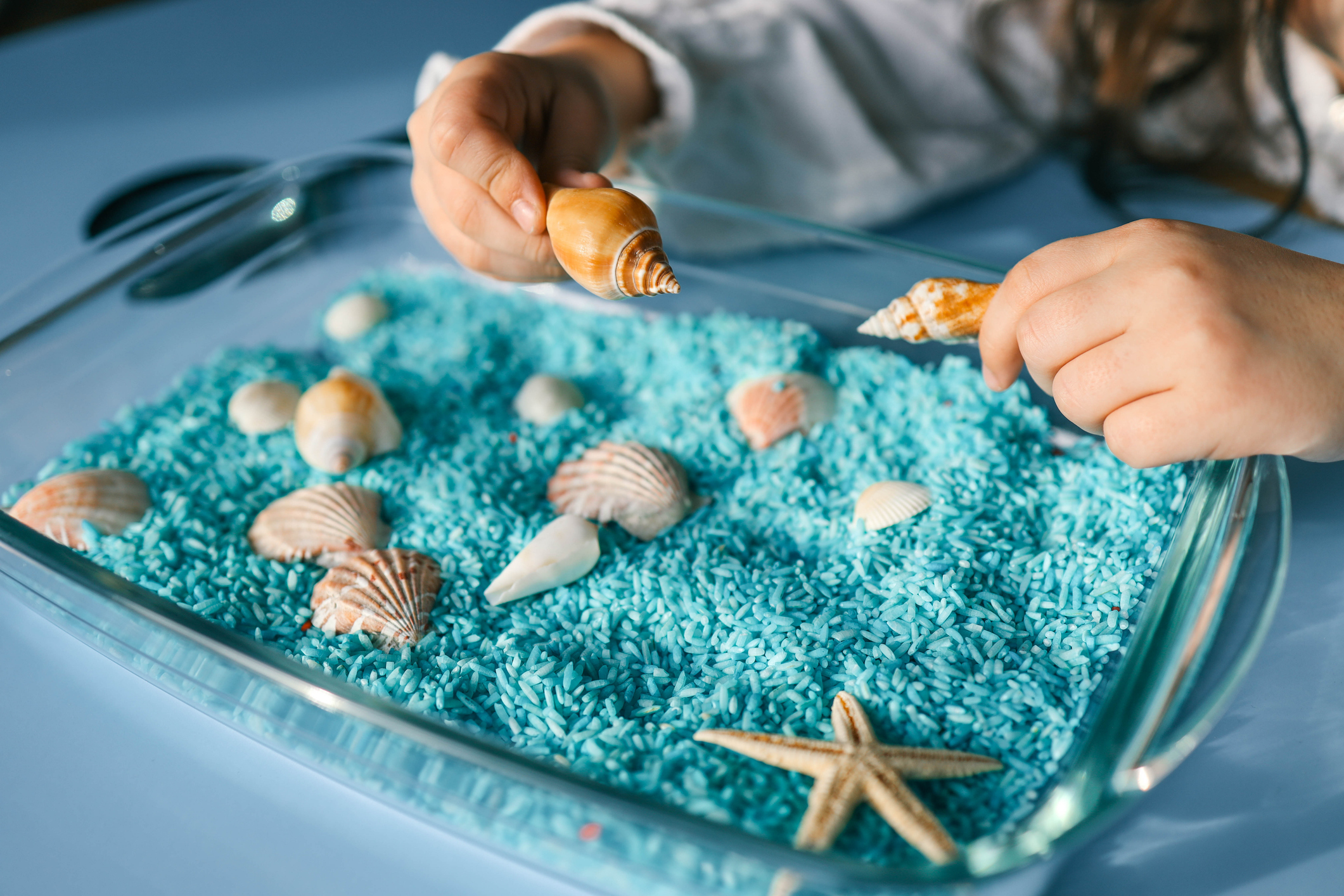
Sensory play is any activity that uses a child’s senses. This includes touch, sight, sound, smell, taste, balance and movement. Sensory play may look like messy fun, but it is an important way young children learn and grow.
When children use their senses, they build strong connections in their brains. Activities like scooping rice, buttoning clothes, playing with water or touching different textures help improve fine motor skills and hand-eye coordination. Sensory play also helps children solve problems as they pour, sort and test their ideas.
Sensory play supports language and early writing skills too. When children talk about what they feel and see, they learn new words. Using their fingers and hands during play helps strengthen the muscles they will use later for writing.
Sensory activities can also help children feel calm. They support emotional skills by helping children manage big feelings. Sensory play teaches cause and effect as well. For example, splashing water is fun, but it can make clothes wet. Learning cause and effect helps children understand how actions lead to results.
Parents can support sensory play at home using simple items. Bowls of water, playdough, sand, leaves or kitchen spices are great tools. The goal is not to be perfect, but to explore. When children are free to use their senses, they build curiosity, creativity and confidence.