
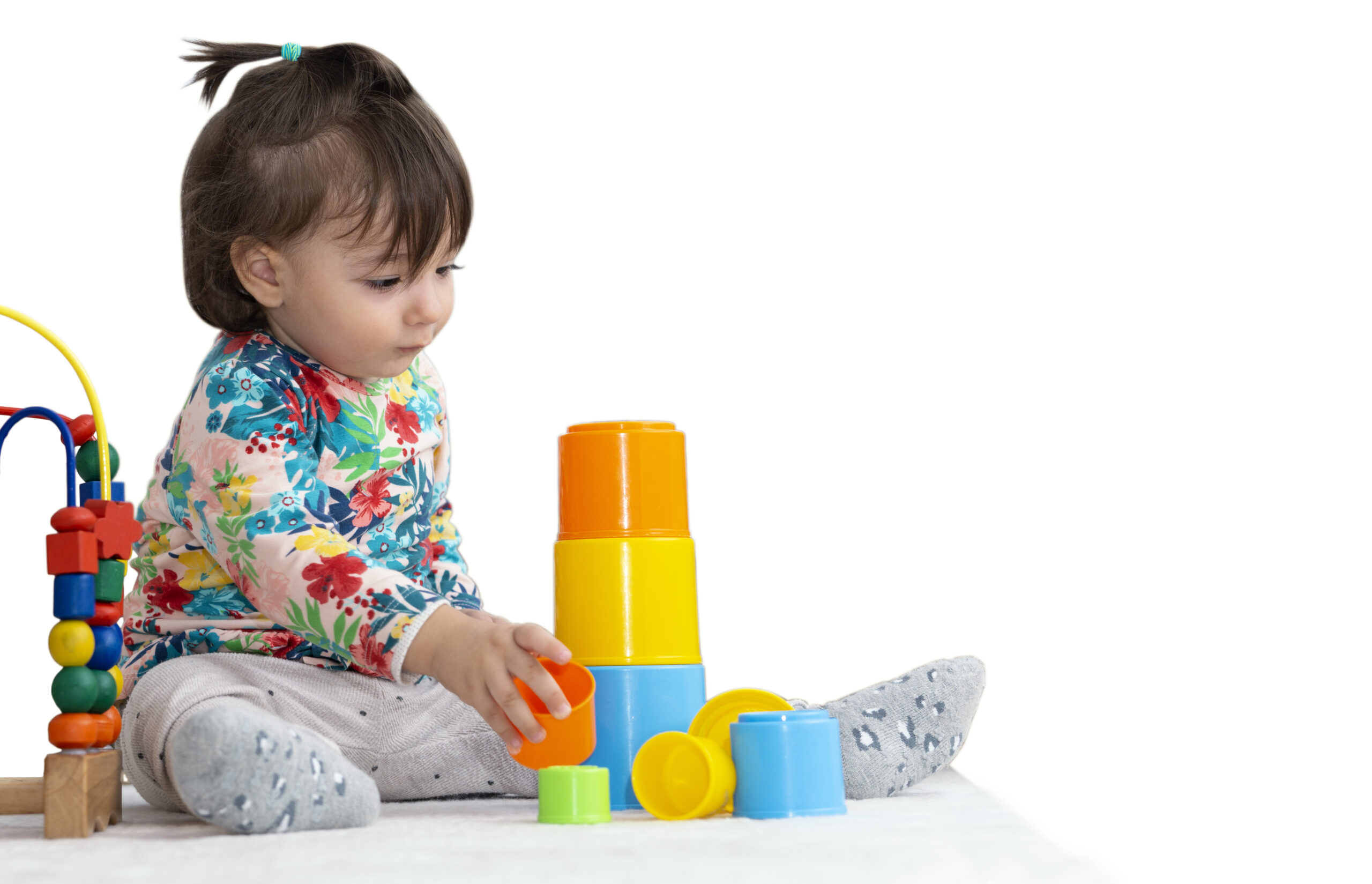
When holiday shopping for your child, keep in mind that the best toys spark imagination and support learning while keeping your child engaged. Following age guidelines will help you choose toys that are not only safe but also align with your child’s developmental stage.
For infants from birth to 8 months, it is best to get toys that stimulate their senses. At this stage, infants enjoy bright colors, soft textures and gentle sounds. Toys that encourage reaching, grasping and listening give them new ways to learn.
Examples include:
- Soft cloth rattles or wrist rattles
- Play gyms with hanging toys
- Baby-safe mirrors
- Soft fabric books with textures
For babies 9-18 months, toys should build motor skills, spark curiosity and allow the babies to imitate actions they see adults do. At this stage, children are on the move and eager to explore the world around them.
Examples include:
- Push toys with handles (for example, toy lawn mowers or shopping carts)
- Stacking rings or nesting cups
- Large knob puzzles
- Musical toys with buttons to press
For toddlers 19-24 months, toys that promote independence and creativity work best. Children at this age enjoy simple challenges that build problem-solving skills.
Examples include:
- Ride-on toys with foot power
- Shape sorters with large pieces
- Pretend cleaning tools (for example, child-size broom or duster)
- Foam bath blocks or pouring toys
For toddlers 2 to 3 years old, pretend-play toys boost imagination and social skills. Children at this age benefit from toys that encourage active play.
Examples include:
- Play kitchens with pretend food
- Toy tool sets with chunky pieces
- Large wooden building blocks
- Ride-on scooters (three-wheel for stability)
For preschoolers 3 to 4 years old, toys that support storytelling and hands-on learning strengthen communication and fine motor skills.
Examples include:
- Train sets or car tracks
- Easels with chalk or dry erase boards
- Matching card games
- Playsets with animals or people figures
For preschoolers 4 to 5 years old, toys that encourage both independence and teamwork build important social skills. Look for games that involve sharing and cooperation to prepare children for group play.
Examples include:
- Board games with simple rules
- Craft kits with stickers or stamps
- Picture books with longer stories
- Child-sized sports gear (for example, plastic bowling sets, T-ball stands)
Supervision matters at every age. Be sure to discard toys with broken parts, loose pieces or sharp edges and clean toys regularly. By choosing age-appropriate toys, you can make playtime safe and fun and support your child’s development.
Get more ideas like this in each Parents’ Pages monthly email.